Beginning with 9 Ways to Grow Your Emotional Intelligence, the narrative unfolds in a compelling and distinctive manner, drawing readers into a story that promises to be both engaging and uniquely memorable.
Emotional intelligence plays a crucial role in personal and professional success, influencing relationships and decision-making. This guide explores practical strategies to enhance emotional intelligence and apply it effectively in various settings.
Understanding Emotional Intelligence
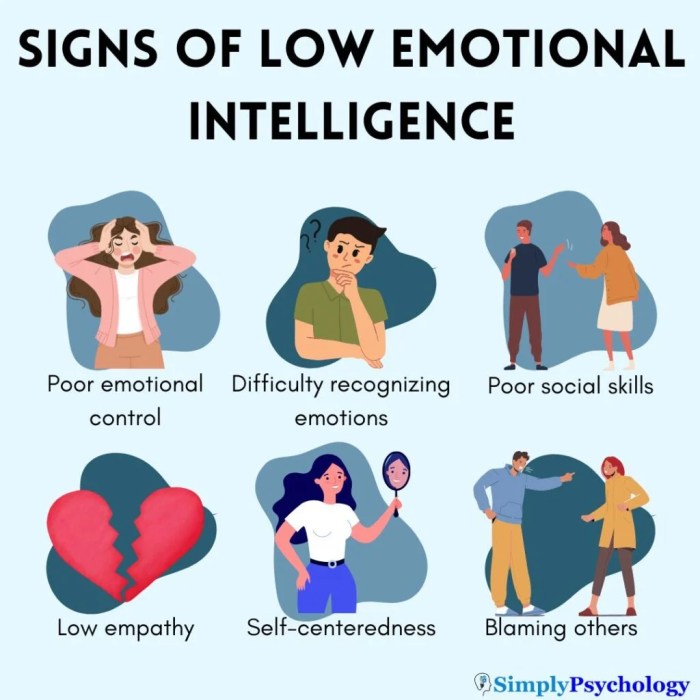
Emotional intelligence refers to the ability to recognize, understand, and manage our own emotions, as well as being able to recognize, understand, and influence the emotions of others. It plays a crucial role in both personal and professional life, impacting our relationships, decision-making, and overall well-being.
Positive Impact on Relationships
Emotional intelligence can positively impact relationships by fostering better communication, empathy, and conflict resolution. For example, individuals with high emotional intelligence are better equipped to handle disagreements constructively, listen actively to others’ perspectives, and express their own feelings in a clear and respectful manner.
Key Components of Emotional Intelligence
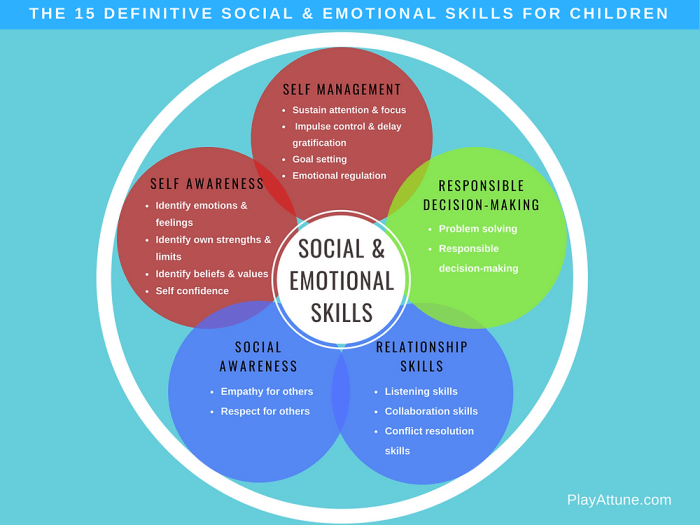
- Self-awareness: This involves recognizing and understanding our own emotions, strengths, weaknesses, and values.
- Self-regulation: Refers to the ability to manage and control our emotions, impulses, and reactions in different situations.
- Empathy: The capacity to understand and share the feelings of others, showing compassion and being able to connect emotionally.
- Social skills: Involves effective communication, conflict resolution, teamwork, and building positive relationships with others.
Practical Ways to Enhance Emotional Intelligence
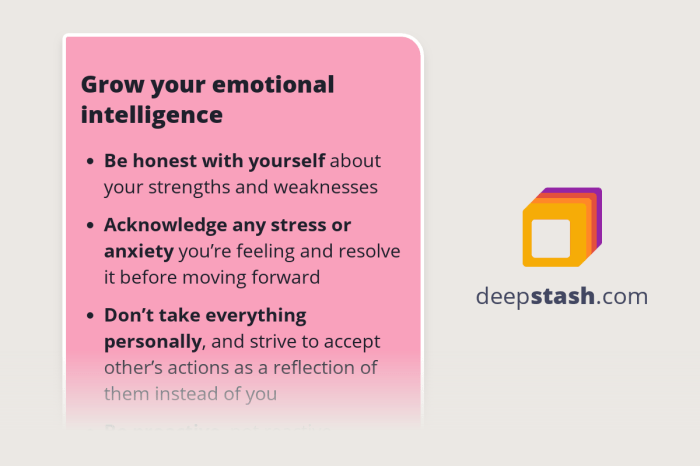
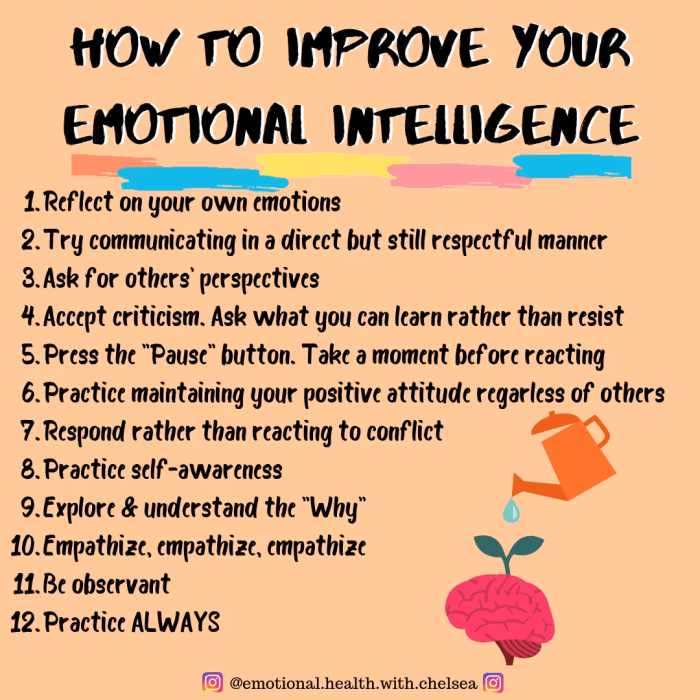
Improving emotional intelligence involves various strategies that can help individuals better understand and manage their emotions, as well as navigate social interactions more effectively. Here are some practical ways to enhance emotional intelligence:
Enhancing Self-Awareness
- Journaling: Keeping a journal to reflect on thoughts, feelings, and behaviors can increase self-awareness and provide insights into patterns.
- Mindfulness Exercises: Practicing mindfulness can help individuals stay present and aware of their emotions, thoughts, and bodily sensations.
Developing Empathy
- Active Listening: Paying full attention to others, listening without judgment, and showing empathy can enhance understanding of others’ perspectives.
- Perspective-Taking: Putting yourself in someone else’s shoes and trying to see things from their point of view can improve empathy and interpersonal relationships.
Emotional Regulation Skills
- Identifying Triggers: Recognizing personal triggers that lead to emotional reactions is key to managing emotions effectively.
- Deep Breathing: Taking deep breaths can help calm the mind and body during moments of stress or intense emotions.
- Positive Self-Talk: Using positive affirmations and self-talk can help shift negative emotions and promote a more balanced outlook.
Applying Emotional Intelligence in Various Settings
Emotional intelligence plays a crucial role in different settings, including the workplace and personal relationships. By understanding and applying emotional intelligence effectively, individuals can enhance their leadership skills, improve teamwork, resolve conflicts, and make better decisions.
Benefits of Emotional Intelligence in the Workplace
- Enhanced Leadership: Leaders with high emotional intelligence can inspire and motivate their team members, leading to increased productivity and a positive work environment.
- Effective Teamwork: Emotionally intelligent individuals can understand and manage their emotions and those of others, fostering better collaboration and communication within teams.
- Conflict Resolution: By recognizing and addressing emotions in a constructive manner, individuals can navigate conflicts more effectively, leading to resolutions that benefit all parties involved.
Improving Communication and Decision-Making in Personal Relationships
- Active Listening: Being emotionally intelligent enables individuals to listen actively, understand others’ perspectives, and communicate effectively in personal relationships.
- Empathy and Understanding: Emotionally intelligent individuals can empathize with others, build stronger connections, and make better decisions based on understanding emotions.
- Resolving Differences: By managing emotions and practicing empathy, individuals can resolve conflicts in personal relationships in a respectful and constructive manner.
Practical Application of Emotional Intelligence in Challenging Situations
- Self-Awareness: Recognize your emotions and how they impact your thoughts and actions in challenging situations.
- Emotion Regulation: Practice techniques to manage and regulate your emotions effectively, such as deep breathing or taking a moment to reflect before responding.
- Empathy and Understanding: Put yourself in the other person’s shoes, understand their perspective, and respond with empathy and respect.
Final Review
In conclusion, developing emotional intelligence through self-awareness, empathy, and effective emotion management can lead to improved communication, stronger relationships, and better conflict resolution. By implementing the discussed strategies, individuals can enhance their emotional intelligence and navigate challenging situations with confidence and grace.