7 Habits to Grow Your Mental Toughness sets the stage for this enthralling narrative, offering readers a glimpse into a story that is rich in detail with casual formal language style and brimming with originality from the outset.
Mental toughness is a key factor in personal growth, impacting work, relationships, and health. By developing seven key habits, individuals can enhance their resilience and strength, ultimately leading to success.
The Importance of Mental Toughness

Mental toughness is a crucial trait that plays a significant role in personal growth and development. It allows individuals to navigate through challenges, setbacks, and obstacles with resilience and determination.
Enhanced Performance
Mental toughness enables individuals to perform at their best even under pressure or stressful situations. It helps them stay focused, motivated, and dedicated to achieving their goals.
Improved Resilience
Individuals with mental toughness are better equipped to bounce back from failures or disappointments. They view setbacks as opportunities for growth and learning, rather than as insurmountable obstacles.
Stronger Relationships
Mental toughness also positively impacts relationships, as it allows individuals to communicate effectively, handle conflicts constructively, and show empathy and understanding towards others. It fosters healthier and more meaningful connections with others.
Better Health and Well-being
Studies have shown that mental toughness is linked to better physical health and overall well-being. Individuals with high levels of mental toughness are more likely to adopt healthy habits, cope with stress effectively, and maintain a positive outlook on life.
Key Habits to Develop Mental Toughness
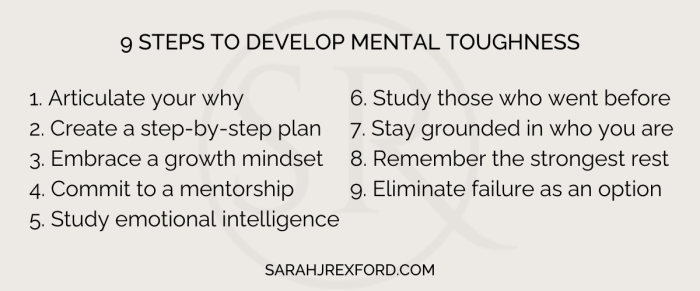
Developing mental toughness is crucial for navigating life’s challenges and achieving success. Here are seven key habits that can help improve your mental resilience and strength:
1. Positive Self-Talk
Positive self-talk involves replacing negative thoughts with constructive and affirming messages. By changing your inner dialogue, you can boost your confidence and motivation, leading to a more resilient mindset.
2. Goal Setting
Setting clear and achievable goals provides direction and purpose, helping you stay focused during tough times. Break down larger goals into smaller milestones to track your progress and celebrate your achievements along the way.
3. Embracing Challenges
Viewing challenges as opportunities for growth rather than obstacles can enhance your mental toughness. Embrace difficulties as chances to learn, adapt, and become stronger in the face of adversity.
4. Practicing Gratitude
Cultivating a sense of gratitude can shift your perspective towards positivity and resilience. Regularly acknowledging and appreciating the good things in your life can help you build a more resilient mindset.
5. Mindfulness and Meditation
Engaging in mindfulness practices and meditation can help you develop a greater awareness of your thoughts and emotions. By staying present and focused, you can better manage stress, improve concentration, and enhance your mental resilience.
6. Seeking Support
Building a strong support system of friends, family, or mentors can provide encouragement and perspective during tough times. Don’t hesitate to reach out for help when needed, as connecting with others can strengthen your mental toughness.
7. Resilience Building Exercises
Engaging in resilience-building exercises, such as visualization, deep breathing, or physical activity, can help you develop coping strategies for managing stress and adversity. Practice these exercises regularly to enhance your mental toughness and emotional strength.
Strategies for Strengthening Mental Toughness

Developing mental toughness requires implementing various strategies to overcome challenges and setbacks. By utilizing specific techniques, individuals can enhance their resilience and ability to thrive in difficult situations.
Setting Clear Goals and Objectives
One effective strategy for strengthening mental toughness is setting clear, specific goals and objectives. By establishing achievable targets, individuals can stay focused and motivated, even when faced with obstacles. For example, successful athletes often set performance goals to push themselves beyond their limits and enhance their mental resilience.
Practicing Mindfulness and Meditation
Engaging in mindfulness practices and meditation can help individuals build mental toughness by enhancing their ability to stay calm and focused under pressure. By regularly practicing mindfulness techniques, individuals can develop a strong sense of self-awareness and emotional regulation, allowing them to navigate challenges with clarity and composure.
Seeking Support and Feedback
Another important strategy for strengthening mental toughness is seeking support and feedback from mentors, coaches, or peers. By surrounding themselves with a supportive network, individuals can gain valuable insights and perspectives that can help them overcome setbacks and grow stronger mentally. For example, seeking constructive feedback from a mentor can provide valuable guidance for improving performance and developing resilience.
Embracing Failure and Learning from Setbacks
Embracing failure as a learning opportunity is a crucial strategy for developing mental toughness. By reframing setbacks as valuable lessons and opportunities for growth, individuals can build resilience and perseverance in the face of adversity. For instance, successful entrepreneurs often view failure as a stepping stone to success and use setbacks as fuel for personal and professional growth.
Conclusive Thoughts

In conclusion, adopting the 7 Habits to Grow Your Mental Toughness can significantly improve one’s ability to navigate challenges and setbacks, leading to a more fulfilling and successful life.