3 Simple Ways to Grow Your Own Microgreens sets the stage for this informative journey, offering readers practical insights on cultivating these nutrient-packed greens with ease.
Learn about the benefits of microgreens, methods to grow them, and how to harvest and use them effectively.
Benefits of Growing Microgreens
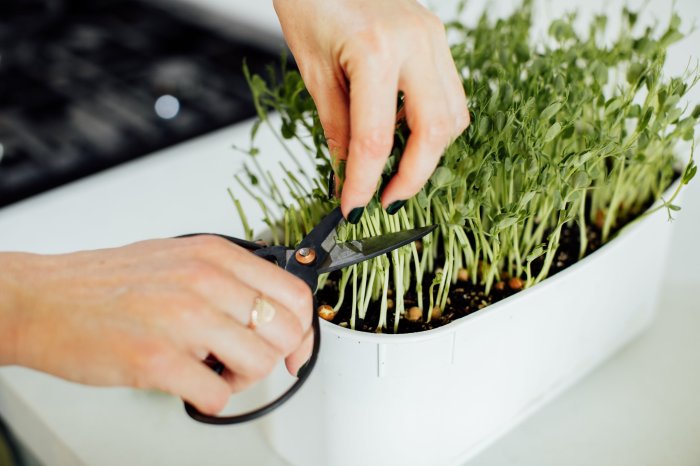
Microgreens are not only visually appealing but also packed with essential nutrients that can benefit your health in various ways.
Nutritional Benefits
- Microgreens are rich in vitamins, minerals, and antioxidants, making them a powerhouse of nutrients.
- They contain higher concentrations of nutrients compared to their mature counterparts, making them a superfood.
- Microgreens are a good source of fiber, which is essential for digestion and overall gut health.
Advantages of Growing Microgreens at Home
- Growing microgreens at home allows you to have a fresh and readily available source of nutritious greens at your fingertips.
- You have control over the growing process, ensuring that no harmful chemicals or pesticides are used in the cultivation of your microgreens.
- It is a cost-effective way to add nutrient-rich greens to your diet without having to rely on store-bought options.
Flavor Profiles of Different Types of Microgreens
- Pea shoots have a sweet and slightly nutty flavor, perfect for adding a fresh and crisp taste to salads or sandwiches.
- Radish microgreens have a spicy kick similar to the mature radish, adding a flavorful punch to dishes.
- Sunflower microgreens have a mild, nutty flavor that pairs well with a variety of dishes, from soups to stir-fries.
Methods to Grow Microgreens

Growing microgreens indoors can be a fun and rewarding experience. Here are some step-by-step methods to help you get started:
Choosing the Right Containers
When it comes to growing microgreens indoors, the type of container you choose can make a big difference in the success of your crops. Here are some of the best types of containers to use:
- Plastic trays with drainage holes: These are ideal for growing microgreens as they allow excess water to drain out easily, preventing waterlogging.
- Seedling trays: These trays come in various sizes and are perfect for sowing a variety of microgreen seeds at once.
- Recycled containers: You can repurpose containers like shallow plastic containers or egg cartons for growing microgreens, as long as they have drainage holes.
Maintaining Ideal Growing Conditions
To ensure your microgreens thrive, it’s essential to maintain the ideal growing conditions. Here are some tips to help you achieve optimal growth:
- Light: Microgreens need plenty of light to grow. Place them in a sunny spot or use grow lights to provide adequate light exposure.
- Watering: Keep the soil moist but not waterlogged. Water from the bottom to prevent mold growth and rotting.
- Temperature: Maintain a consistent temperature of around 70°F for optimal growth. Avoid placing microgreens in drafty areas or near heat sources.
- Air circulation: Good air circulation is crucial to prevent diseases. Use a fan on low setting to ensure proper airflow around your microgreens.
Harvesting and Using Microgreens
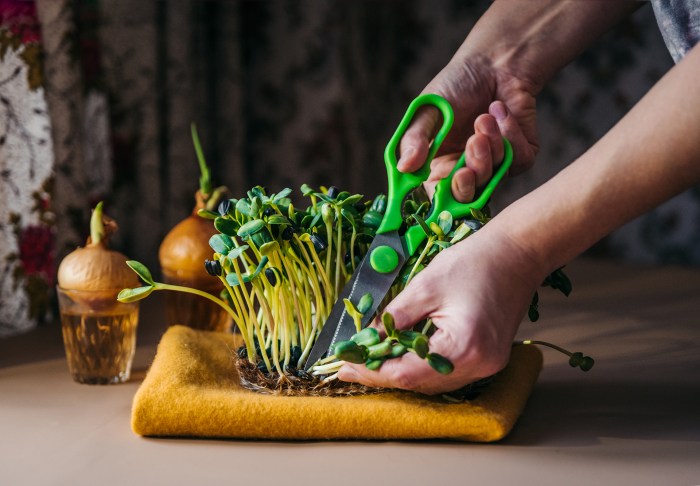
When it comes to harvesting microgreens, the optimal time to do so is when they have grown to about 1-3 inches in height. This is typically around 7-14 days after planting, depending on the variety. Harvesting at this stage ensures the best flavor and nutritional content.
Creative Ways to Incorporate Microgreens into Dishes
Microgreens can be a versatile and flavorful addition to a wide range of dishes. Here are some creative ways to incorporate them:
- Add microgreens to sandwiches and wraps for a fresh and crunchy texture.
- Sprinkle microgreens on top of soups or salads as a garnish.
- Use microgreens to top off omelets or scrambled eggs for a pop of color and flavor.
- Blend microgreens into smoothies for an added nutrient boost.
Storing Harvested Microgreens
It’s important to store harvested microgreens properly to prolong their freshness. Here are some suggestions:
- Rinse the microgreens gently and pat them dry with a paper towel before storing.
- Place the microgreens in a container lined with a paper towel to absorb any excess moisture.
- Store the container in the refrigerator and use the microgreens within a few days for the best flavor and texture.
Ending Remarks

Discover the joy of growing your own microgreens and elevate your dishes with these fresh, flavorful additions. Start your microgreen journey today!